For years, carbon credits occupied an awkward space in corporate strategy. To some, they represented a legitimate climate finance mechanism capable of mobilising capital toward mitigation projects. To others, they became shorthand for greenwashing and corporate shortcuts.
Today, that debate is no longer sufficient.
Carbon markets are becoming increasingly embedded within the global transition economy, while scrutiny over climate-related claims is intensifying. Investors, regulators and financial institutions are asking tougher questions about how companies manage emissions, disclose transition plans and engage with carbon credits. Increasingly, these questions are landing not at the sustainability department but at the boardroom table.
This is because carbon credits are no longer merely an ESG communications issue. They are becoming a governance, disclosure and fiduciary issue.
Frameworks such as the IFRS Sustainability Disclosure Standards, alongside evolving expectations from securities regulators, stock exchanges and anti-greenwashing guidance globally, are reshaping how companies must approach climate-related claims. In Malaysia, this direction is further reinforced through the recently launched National Carbon Market Policy (NCMP), which signals the government’s intent to build a credible, transparent and high-integrity carbon market ecosystem aligned with national climate ambitions and international best practices. Under IFRS S2 specifically, companies are expected to disclose how carbon credits are used within transition plans and climate targets, including the extent of reliance on offsets, the nature and integrity of those credits, and how such use aligns with broader decarbonisation pathways and emerging national policy expectations.
This changes the conversation fundamentally.
Boards can no longer simply approve sustainability statements at a high level without understanding the assumptions underpinning them. Directors are increasingly expected to interrogate whether climate-related disclosures are credible, defensible and supported by appropriate governance structures.
The real issue therefore is not whether companies use carbon credits. It is whether boards understand the risks attached to them.
One of the biggest mistakes organisations continue to make is assuming that all carbon credits are fundamentally interchangeable. They are not. Different project types carry different levels of permanence, additionality, leakage and reputational exposure. A mangrove restoration project differs materially from a renewable energy avoidance project. Engineered removals are not equivalent to avoided deforestation credits.
Yet many organisations still approach carbon credits largely as a procurement exercise driven by price.
That mindset is becoming increasingly dangerous.
Cheap credits with questionable integrity may offer short-term reputational comfort, but they can create far greater long-term exposure if climate claims are challenged. Controversies involving avoided deforestation and legacy REDD+ projects, where some credits were criticised for overstating emissions reductions or lacking additionality, have demonstrated how rapidly confidence and corporate credibility can be undermined when integrity concerns emerge. Around the world, regulators are tightening expectations around environmental disclosures and offset-related marketing claims, particularly in response to growing scrutiny over greenwashing and high-profile carbon credit scandals. Investors are also becoming more sophisticated in distinguishing between companies pursuing genuine operational decarbonisation and those relying excessively on offsets to preserve business as usual, recognising that long-term resilience will ultimately depend on credible transition strategies rather than low-cost claims of neutrality.
Boards therefore need to move beyond asking, “How many credits should we buy?” toward asking more strategic governance questions. What role should carbon credits play within our broader transition strategy? Are we prioritising direct emissions reductions within operations and supply chains first? What due diligence processes govern carbon credit procurement? How are integrity risks assessed and escalated? Are management incentives aligned with credible transition outcomes rather than short-term optics?
These are not technical sustainability questions alone. They are governance questions directly tied to enterprise value, disclosure integrity and long-term competitiveness. Importantly, carbon credits should not exist in isolation from broader corporate transition plans. The most credible organisations increasingly position them as one component within a wider decarbonisation architecture complementing operational emissions reductions, supporting hard-to-abate sectors and helping channel finance into climate mitigation projects that may otherwise struggle to scale.
This matters particularly in Southeast Asia, where carbon markets could play an important role in mobilising capital toward peatland conservation, blue carbon ecosystems, mangrove restoration and community-based nature solutions. But integrity will ultimately determine whether these markets gain legitimacy or lose public trust.
Directors therefore do not need to become carbon market specialists, but they do need sufficient literacy to challenge assumptions, interrogate claims and oversee climate-related risks with the same rigour applied to financial governance.
The future of carbon markets will not be defined by volume alone. It will be defined by credibility, transparency and accountability. As carbon constraints tighten globally, companies that govern climate risk effectively will be far better positioned to attract capital, maintain stakeholder confidence and navigate the transition economy. Those that continue treating carbon credits as a peripheral ESG exercise may find themselves exposed not only to reputational risk, but increasingly to governance and disclosure risk as well.
Carbon credits are no longer an ESG side conversation. They are increasingly becoming a boardroom issue and boards that fail to recognise that shift risk falling behind.
Dr Renard Siew is currently the President of the Malaysia Carbon Market Association (MCMA) and the Group Head of Corporate Sustainability for Yinson where he is responsible for advancing the organisation’s work in the field of climate change and sustainability.
Prior to this, he was involved in the implementation of the sustainability agenda for a number of public-listed corporations (Sime Darby, CIMB, MRCB) and was a researcher at the Centre for Energy and Environmental Markets (CEEM) contributing thought leadership in: sustainability/ integrated reporting, GHG reporting and verification, carbon markets and responsible investment (across different asset classes: equities, infrastructure and property/real estate). Renard is a graduate of Cambridge University and UNSW. He holds an Executive Education in Public Leadership from the Harvard Kennedy School. In 2013, he was selected as one of 15 scholars to attend the PhD Academy at the Swiss Federal Institute of Technology (ETH). He has published in many international refereed journals. In 2014, he won a Highly Commended Paper award by the Emerald Literati Network and was inducted into the prestigious Global Young Academy as recognition of his research impact.
He was the Co-Chair of the Climate Change & Disaster Risk Management Working Committee and UNEP-FI’s Collective Commitment on Climate Action. In 2020, he was appointed an SDG Champion-Climate Action by the World Economic Forum (WEF). He is a member of the WEF Expert Network Group and serves on the WEF Global Future Council on SDG Investment. He was accepted into the Forbes Fellowship Programme.
The article was written by Dr Renard Siew.
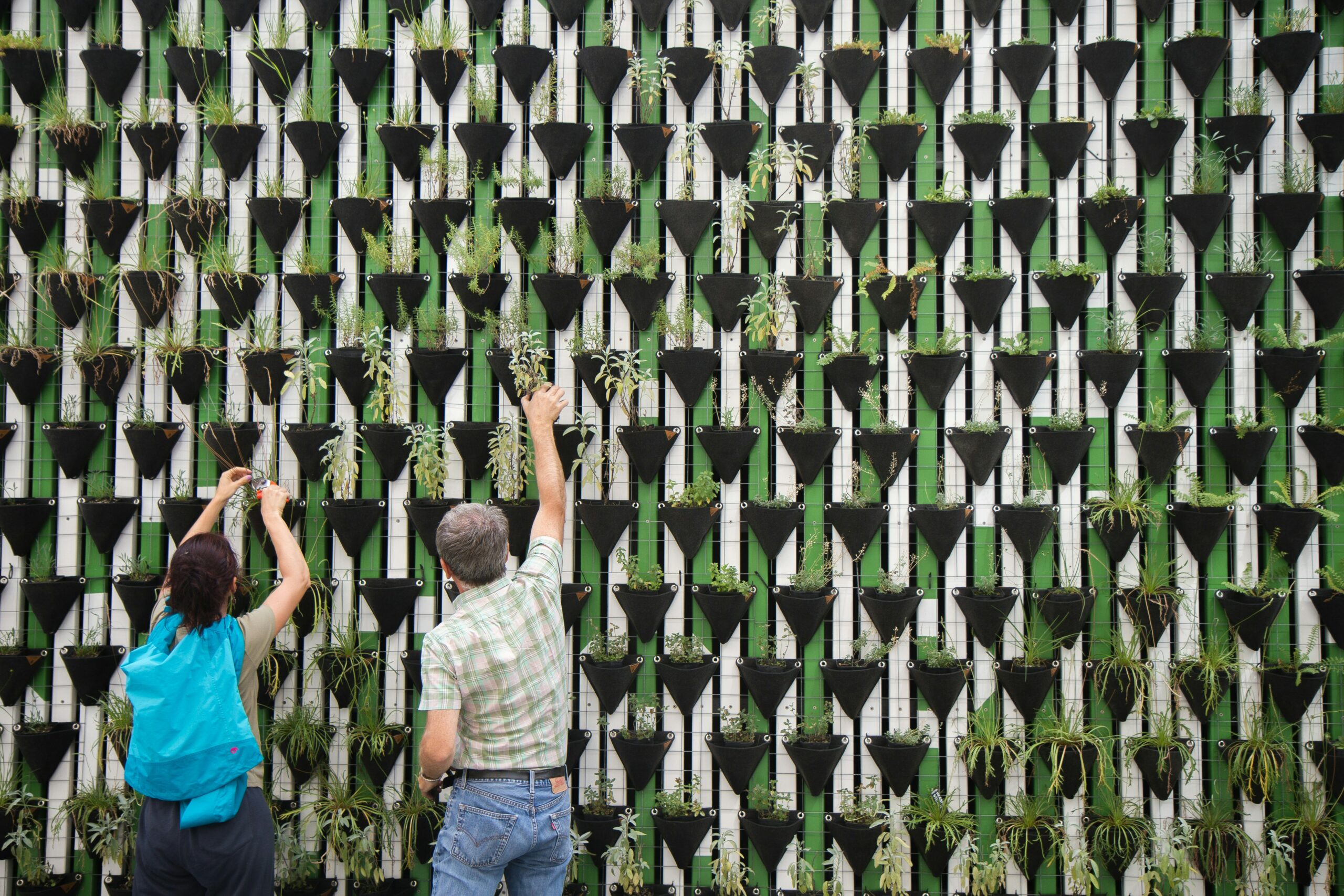
Photo by Siarhei Kuchuk on Pexels.com.

Related Stories

 5.0
5.0  8 Minutes
The Chessboard of Disclosure: When Sustainability Becomes Strategic Transparency
25 May 2026


 5.0 6 Minutes
Carbon Credits Are No Longer an ESG Side Issue: Why Boards Must Treat Them as a Go...
21 May 2026
 5.0 19 Minutes
Overcoming the Hurdles to Integrating Sustainability into Business Strategy
30 December 2024
 5.0 13 Minutes
Why ESG Integrity is at a Crossroad Between Aspiration and Regulation
13 September 2024
 5.0 5 Minutes
Spotlight on Sustainability: Gaps in Sustainability Reporting
28 August 2024